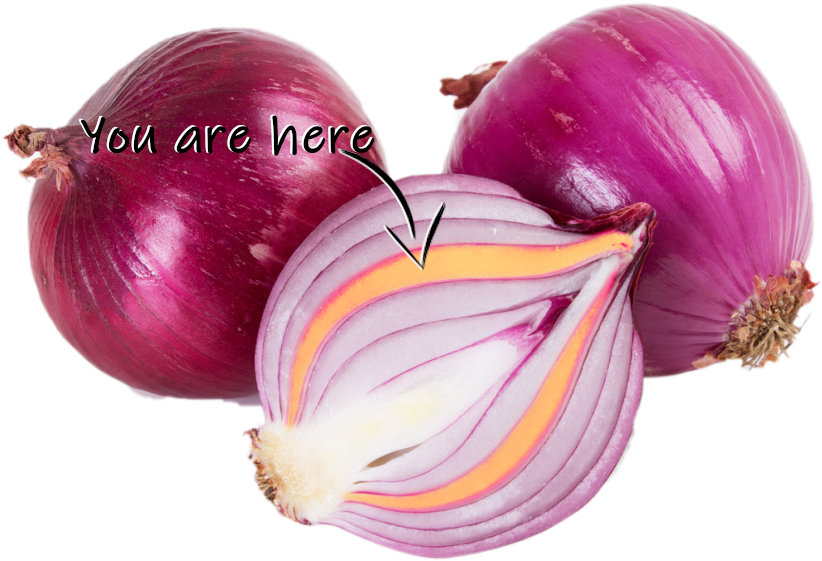
You are probably in or just came out of some form of lockdown. This isn’t easy and we need to acknowledge that. Being in isolation for a prolonged period, you realize that it’s like an onion, it has many layers and makes you cry!
The first part of the isolation onion is that thin outer skin. You know the one you can chip off with a fingernail. Yeah, the easy one, the one that doesn’t make you cry. It’s the part of isolation where there is more excitement than trepidation because it’s new and variable and interesting. That part we don’t need to discuss, yes some people were freaking out from day one, well before day one actually, but that’s an outlier. Most of us were quite cool going into this and then things started getting real.
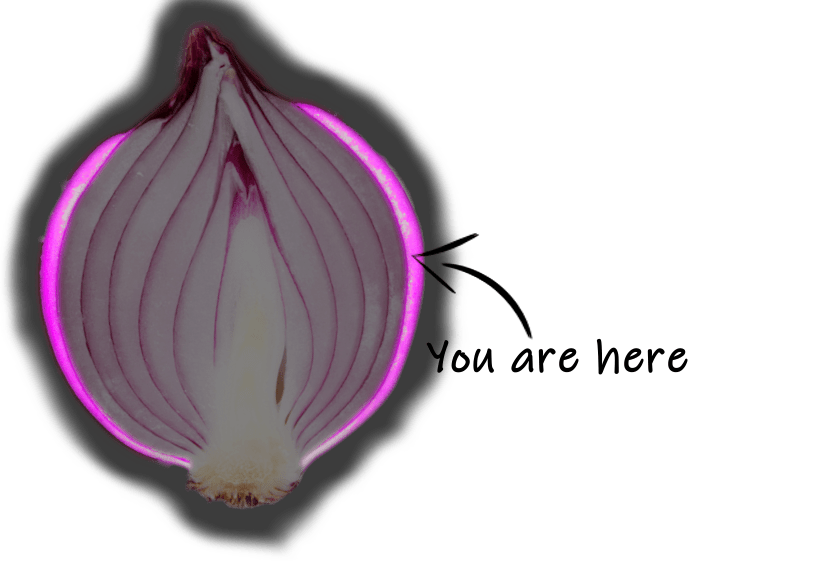
Layer 1 of the Isolation Onion, This is not comfortable! I thought I was weird for liking an office space, not a cubicle, life is to short to spend in a cubicle. But I really like the physical separation of work and home. Many of my friends are the exact opposite and a really good friend of mine built her entire business’s operational model on the exact opposite of what I like. To be honest what I use to like. When lockdown started in my country it was with great pride in our government making good choices and deep personal trepidation that I started staying at home. You see I am not built for isolation, many of us aren’t and I fondly remember the first meme about “introverts coming to their own” and thinking, we have no idea how this is going to rock our worlds.
I was at the first layer of my isolation onion and I already had tears in my eyes. This was uncomfortable, it affected me and my way of doing things and I didn’t like it. Me, Me, Me, yes that’s right the first thing that gets to you is that your personal comforts and rituals are disturbed. You feel like you have no space or that your space is invaded, you desperately try to create a new routine but it doesn’t last long. This quickly becomes annoying as hell, I cried a little.

Layer two of the Isolation Onion, mundanity is death. Variability is a spice of life that we don’t appreciate enough. Isolation and repetitive environmental exposure is not a healthy space for the mind. When you physically interact with the same people day in and day out, when your existence is, for the most part, restricted to your living space and you have the exact same routine, your are in a repetitive environment. My less expressive friends (Introverts, I hate the label #justsaying) have confirmed my suspicion, they simply have a higher tolerance for isolation, but eventually, everyone folds and some of us cry. Your commute, for example, is a variable element in your day, and variability is a form of exercise for the brain that keeps us sane, or as close to it as possible.
Meet Bill, he packs tuna for a living, been doing it for 20 years. Bill does the same thing every day, but he has variable elements within that day that bring a change in experience and importantly emotions. Bill’s brain doesn’t get much exercise from tuna packing. His brain does get exercise from lunchtime chatting or being cut off in traffic on his way to the store and then telling his three-legged dog lucky joe, guess where the lucky part comes from, about his day. Variability is such an important part of the human existence and we don’t think about nearly enough. Don’t confuse chaos with variability. Chaos is a whole different beast, I’ll deal with in another article. Back to the show, a mind that is not exposed to variability falls into a state of disrepair, it basically becomes fat, slow and bored, and a bored mind makes up its own games for entertainment. Depending on what your mental state is the games can be super fun, or super not fun.
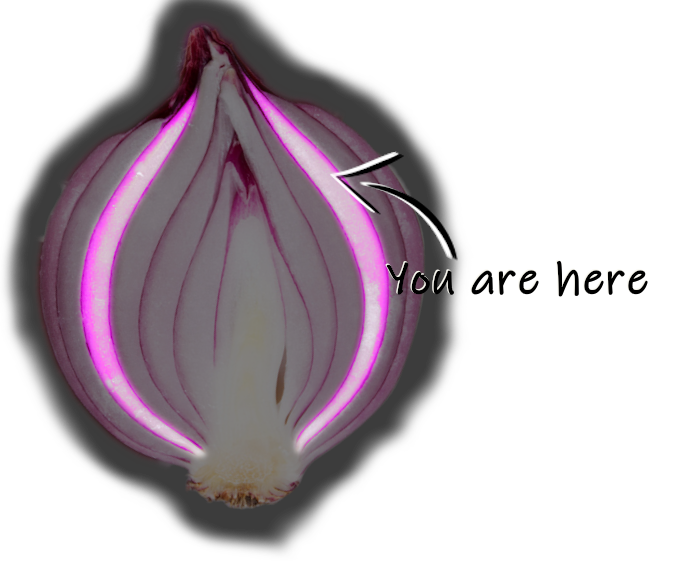
Welcome to Isolation onion layer three, coping mechanisms be the name, see how long you last the game. The mind is immensely powerful, when our minds are not being stimulated with enough variability they can makes it up on their own . What we see is far less subtle and far more infectious than we think, not everyone goes completely off the rails. We see a lot of irritability, we see a lot of sadness and grief. We see a lot of over indulgence in sex, alcohol (if you can get it), food, entertainment and work. The irritability, sadness, grief and over indulgence is all a pseudo cure for mundanity, a feeble attempt to create variability where there is none, creating a cycle of short lived highs and quick returning lows. Reading this, it sounds like a crackpot theory. “I’m just fine what are you on about”, that’s why overindulgence is added to the mix, everyone needs to cope. Just for a moment ask yourself have I been more irritable lately? Have I been “more productive” i.e. I work more and sleep less? Have I had periods inexplicable sadness and grief? All things the mind creates and justifies to help you cope, games of false variability.
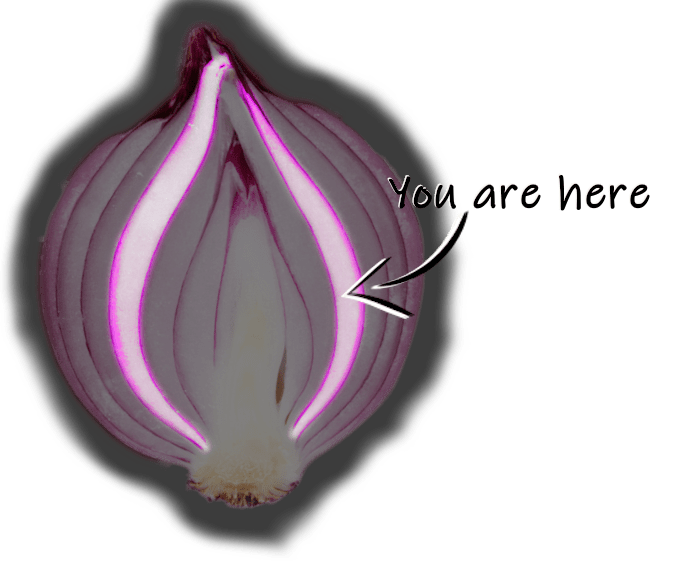
Isolation onion layer 4, emotional entanglement. This may or may not be something you subscribe to, but for a moment go with it. We are all connected to the world, and the energy in our environments shape our perspectives. As individuals our emotions and minds become entangled with our surroundings, it’s what’s binds us to the world, it’s what makes us care. Ever been in a meeting that left you drained? That’s the effect of negative emotional energy on you and there is a lot in the air right now. It’s not just the relentless barrage of information being spewed over every available channel that creates energy. It’s also the literal energy of our collective emotions that is impacting us physically and mentally. The biggest emotion right now is fear and it is dangerously infectious and can be debilitating. I saw the film DUNE based on the novel by Frank Herbert years ago. There is one line from the film that always stuck with me “I must not fear. Fear is the mind-killer”. Part of a monologue where the main character is faced with certain death, in essence recognizing the energy that surrounds him and moulding himself to accommodate for and deal with it effectively. Easier said than done, but it does show a strategy. Recognize what is coming and brace for it, allow it to be felt and accept it for what it is. Stockpiling bog rolls is not an effective coping mechanism for fear or grief. The whole monologue reads like this:
I must not fear. Fear is the mind-killer. Fear is the little-death that brings total obliteration. I will face my fear. I will permit it to pass over me and through me. And when it has gone past I will turn the inner eye to see its path. Where the fear has gone there will be nothing. Only I will remain.
We are surrounded by and experiencing a whole bunch of unpleasant emotions, far more than normal. Everything ranging from discomfort and sadness to guilt and rage has passed over us all in some shape over the last months. Coupling our internal emotional turmoil with what is happening around us and we have a nasty cocktail of fear, uncertainty and doubt brewing up. It’s time to allow yourself to just be, let the emotions flow over you and deal with them as best you can. But what isn’t working right now is avoidance and retention, there is too much in the air to even try and play this game. Living in what is a reality shattering experience no one can be expected to come out a shining star, and that’s OK, just breath. For some its taking a break for others it’s finding professional help but one must never underestimate the effect of collective negative emotions.

Layer 5 of the isolation onion, grief, it’s a layer all on its own. You have probably heard the term grief being thrown around a lot when referring to what people are feeling in lockdown. People are grieving not just for those affected by a pandemic, or the countless individuals who take on the massive risk of being infected themselves to keep our systems running. No, we grieve for ourselves as well. Too much of a good thing is bad for you, and that can go for family as well. Don’t get me wrong I get along brilliantly with my wife and daughter, but my goodness I miss being zoned out and “alone” on a train. Just that space to be by yourself, to clear your mind, to centre your thoughts, to salivate into nothingness. This much-needed self-reflection is continuously being broken by proximity. If you are lucky enough to be isolated with companions, you have a tribe and the tribe wants to interact.
Humans are social animals by nature, we isolate by choice. We like company, even when we say we don’t, we like having people around, well most of us. The restrictions employed in many countries of physical distancing has a massive effect on our mental health. Touch is a form of affection and acceptance that subconsciously allows us to feel safe and welcome. I’m not talking about hugs, although those are by far the best medicine for grief. Touch in this sense is also handshakes, high fives, “fist bumps” and if so inclined chest-bumping. These are all forms of social interaction that physically and subconsciously acknowledges our existence and promotes our feeling of safety and acceptance. For many, this feeling has been dwindling.
For those of us lucky enough to have tolerable isolation companions this is far less of an issue than for those isolated alone. But in the end, isolation means we have lost our connection and our freedom to explore and experience the variability of life. The idea of not being able to leave when you please, to go where you want, to do what you like, that gets to us, prisoners in our own homes. Does it really surprise us that we become disconnected and sad? We all grieve for our freedom and our lost connection to the world and the people around us. We need to acknowledge this emotion and allow ourselves to experience it so that we can make our peace and find new ways of reconnecting.

Layer 6 of the isolation onion, relief. We start to find our feet, many of us have found ways to balance things in our lives, we have become more aware of time and at the same time, less concerned with it. We have started to embrace #remotelife, I had to sorry, and we are feeling good again. But what changed? We did, like a fish in a new tank, it took us a while to get used to the water and start moving around. Similarly, our minds needed time to adjust to becoming stronger swimmers in the emotional see of our heightened existence. We have evolved to find new variability and bend it to our will, we have become stronger because we have acknowledged our weaknesses and given ourselves time to grieve.
This is why the fight is back in many people’s bellies, the hunger to create and make, the drive to achieve and grow. It takes time for people to get to Layer 6. It took me 5 weeks and I’m just getting started. This article, for example, was drafted on the 30th of April. I got the idea around mid-April, spoke to some friends and it’s been dormant for almost a month, why? I was grieving and adjusting to my new reality. But here I am 20 mins to 12 on May the 20th and I’m enjoying writing. Change takes time and most of us were caught off guard. It’s OK! Take your time, find your feet and then walk tall again.
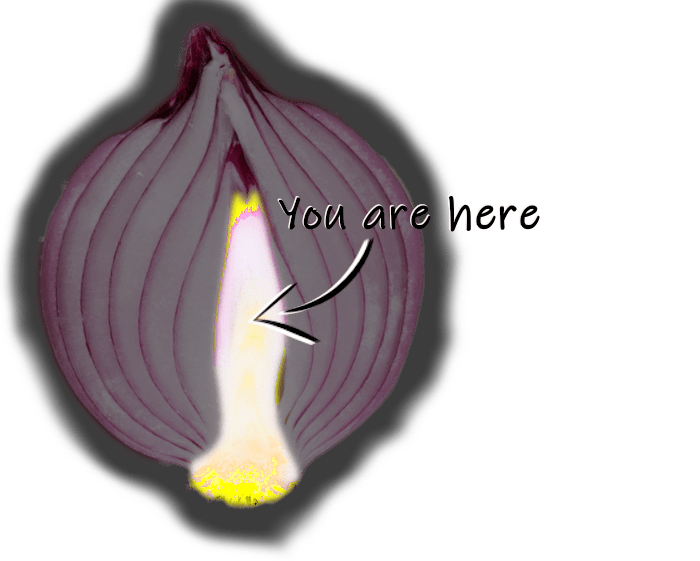
I don’t know what Layer 7 is going to be like , but I know what it is, it is hope. I have experienced so much positivity and kindness in the world of late. I have read so many things that have inspired despite events. I believe it is because I have hope. The human race is a flawed species, no arguments from me. We have some serious issues with how we live and work, how we treat ourselves, others and our planet. But If there is one quality of the human race that I respect above all else it’s our undying devotion to hope. A single person with hope in their hearts can be just as infectious as a single person with fear. Hope brings with it the power of thoughtful positivity and kind courage, a belief in something better and the will power to make it happen. I have hope that much of what we use to call life is about to change and change forever.
I am no fool, I know this is trying times and many are suffering. I am well aware of my position of privilege and the good fortune that I have at this time. But hope is a rising undercurrent in the world that brings a tsunami of positive change. I have seen the evolution of comfort to adapt in a physically distanced world and it makes me smile, we always find a way. We are fantastic creatures who can accomplish so much more than we think we are capable of, as long as we respect ourselves there is hope, and where there is hope there will be a tomorrow better than today.
Allow yourself and others to grieve, and when you are ready, spread hope around you. No one is expecting you to change the world. A text message to let someone know you are thinking of them is enough to bring hope.
 Mind, on the rocks?!
An interesting for me read since I actually love and crave isolation. Free isolation, of course, not being in some kind of cell! I don’t hate being around other people, I just don’t enjoy it for extended periods. I’ve worked from home since 2012 — so I was hopeful (though skeptical) others would come realize this bliss that is work and collaboration with others without all the forced socialization in an office environment. Leave your home when you like, roam the neighborhood when you like — no commute, no unpleasant personalities you have to deal with each day. My kind of work.
LikeLike